Buy my-bicycle.eu ?
We are moving the project
my-bicycle.eu .
Are you interested in purchasing the domain
my-bicycle.eu ?
domain@kv-gmbh.de · 0541-91531010
Buy my-bicycle.eu ?
How can the bicycle brake lever be pressed?
The bicycle brake lever can be pressed by using your fingers to apply pressure to the lever. When you squeeze the brake lever, it activates the brake mechanism, causing the brake pads to press against the wheel rim or rotor, which slows down or stops the bike. It's important to apply gradual and even pressure to the brake lever to ensure smooth and controlled braking. **
How can you tighten the brake lever on a child's bicycle?
To tighten the brake lever on a child's bicycle, you can start by locating the barrel adjuster on the brake lever. Turn the barrel adjuster clockwise to tighten the brake lever. If the brake lever is still loose, you can also try tightening the cable at the brake caliper by using a wrench to loosen the bolt, pulling the cable tighter, and then tightening the bolt again. Finally, test the brake lever to ensure it is tight and responsive before allowing the child to ride the bicycle. **


Similar search terms for Lever
Top-Angebote
Products related to Lever:
-
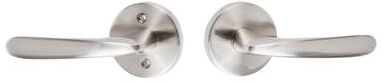
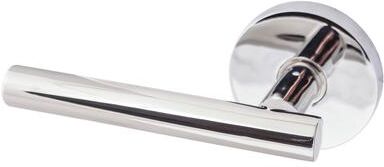
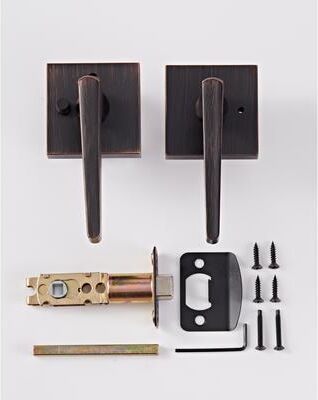
Sure-loc Torino LeverAdd a touch of modern flair to any space with Sure-Loc Hardware's Torino Lever. Crafted from solid metal, this affordable lever features a unique design for lasting durability and a comfortable grip. Explore our range of versatile home hardware...43,16 $*Shipping: 0,00 $Secure redirect to the provider

-
Why doesn't the bicycle adjusting screw hold on the brake lever?
The bicycle adjusting screw may not hold on the brake lever because it could be stripped or worn out, preventing it from creating enough friction to stay in place. Additionally, the screw may not be the correct size or type for the brake lever, causing it to slip or not hold properly. It's also possible that the brake lever itself is damaged or worn, making it difficult for the adjusting screw to hold in place. Regular maintenance and inspection of the brake system can help prevent these issues from occurring. **
-
I need help with the lever principle and the effective lever arm.
The lever principle states that the force needed to move an object is reduced by using a lever. The lever arm is the perpendicular distance from the pivot point to the line of action of the force. To calculate the effective lever arm, you need to consider both the length of the lever arm and the angle at which the force is applied. Understanding these concepts will help you determine how to apply force efficiently to move objects using levers. **
-
Is a lever in physics a one-sided or two-sided lever?
A lever in physics can be either one-sided or two-sided, depending on the arrangement of the fulcrum and the applied force. In a one-sided lever, the fulcrum is located between the applied force and the load, while in a two-sided lever, the load is between the fulcrum and the applied force. Both types of levers are used to amplify force or distance, and they follow the same principles of mechanical advantage and balance. **
-
Is the scissors a two-sided lever or a one-sided lever?
The scissors is a two-sided lever. A lever is a simple machine that consists of a rigid bar or rod that pivots around a fixed point called a fulcrum. In the case of scissors, the fulcrum is the screw that holds the two blades together. When force is applied to one handle, the other handle moves in the opposite direction, demonstrating the two-sided nature of the lever. **

Can the brake lever of the bicycle disc brake be fully depressed?
No, the brake lever of a bicycle disc brake cannot be fully depressed. When the lever is pulled, it activates the brake caliper to squeeze the brake pads against the rotor, creating friction and slowing down the bike. If the lever could be fully depressed, it would mean that the brake pads are already in full contact with the rotor, and there would be no room for further braking force to be applied. This would result in a loss of braking effectiveness and potentially cause safety issues. **
What should I do if the bicycle brake lever is torn out?
If the bicycle brake lever is torn out, the first thing you should do is stop riding the bike and find a safe place to pull over. Then, assess the damage to the brake lever and determine if it can be temporarily fixed or if it needs to be replaced. If it can be temporarily fixed, you can try using duct tape or a similar strong adhesive to secure the lever in place. However, it is best to have the brake lever replaced by a professional bike mechanic as soon as possible to ensure the safety and functionality of your brakes. **
Top-Angebote
Products related to Lever:
-
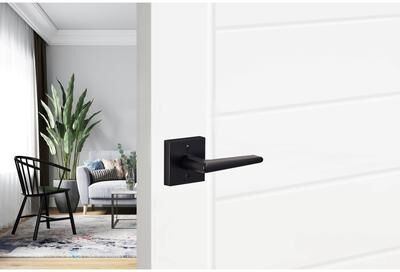
Sure-loc Cedar LeverFor those seeking an affordable yet durable upgrade to their home, the Cedar Lever by Sure-Loc Hardware is an ideal choice. Featuring reliable functionality, budget-friendly pricing, and a contemporary design, it seamlessly integrates into any space.27,49 $*Shipping: 0,00 $Secure redirect to the provider
-
Sure-loc Torino LeverAdd a touch of modern flair to any space with Sure-Loc Hardware's Torino Lever. Crafted from solid metal, this affordable lever features a unique design for lasting durability and a comfortable grip. Explore our range of versatile home hardware...43,16 $*Shipping: 0,00 $Secure redirect to the provider
-
How can the bicycle brake lever be pressed?
The bicycle brake lever can be pressed by using your fingers to apply pressure to the lever. When you squeeze the brake lever, it activates the brake mechanism, causing the brake pads to press against the wheel rim or rotor, which slows down or stops the bike. It's important to apply gradual and even pressure to the brake lever to ensure smooth and controlled braking. **
-
How can you tighten the brake lever on a child's bicycle?
To tighten the brake lever on a child's bicycle, you can start by locating the barrel adjuster on the brake lever. Turn the barrel adjuster clockwise to tighten the brake lever. If the brake lever is still loose, you can also try tightening the cable at the brake caliper by using a wrench to loosen the bolt, pulling the cable tighter, and then tightening the bolt again. Finally, test the brake lever to ensure it is tight and responsive before allowing the child to ride the bicycle. **
-
Why doesn't the bicycle adjusting screw hold on the brake lever?
The bicycle adjusting screw may not hold on the brake lever because it could be stripped or worn out, preventing it from creating enough friction to stay in place. Additionally, the screw may not be the correct size or type for the brake lever, causing it to slip or not hold properly. It's also possible that the brake lever itself is damaged or worn, making it difficult for the adjusting screw to hold in place. Regular maintenance and inspection of the brake system can help prevent these issues from occurring. **
-
I need help with the lever principle and the effective lever arm.
The lever principle states that the force needed to move an object is reduced by using a lever. The lever arm is the perpendicular distance from the pivot point to the line of action of the force. To calculate the effective lever arm, you need to consider both the length of the lever arm and the angle at which the force is applied. Understanding these concepts will help you determine how to apply force efficiently to move objects using levers. **
Similar search terms for Lever
-
Sure-loc Cedar LeverFor those seeking an affordable yet durable upgrade to their home, the Cedar Lever by Sure-Loc Hardware is an ideal choice. Featuring reliable functionality, budget-friendly pricing, and a contemporary design, it seamlessly integrates into any space.27,44 $*Shipping: 0,00 $Secure redirect to the provider
-
Is a lever in physics a one-sided or two-sided lever?
A lever in physics can be either one-sided or two-sided, depending on the arrangement of the fulcrum and the applied force. In a one-sided lever, the fulcrum is located between the applied force and the load, while in a two-sided lever, the load is between the fulcrum and the applied force. Both types of levers are used to amplify force or distance, and they follow the same principles of mechanical advantage and balance. **
-
Is the scissors a two-sided lever or a one-sided lever?
The scissors is a two-sided lever. A lever is a simple machine that consists of a rigid bar or rod that pivots around a fixed point called a fulcrum. In the case of scissors, the fulcrum is the screw that holds the two blades together. When force is applied to one handle, the other handle moves in the opposite direction, demonstrating the two-sided nature of the lever. **
-
Can the brake lever of the bicycle disc brake be fully depressed?
No, the brake lever of a bicycle disc brake cannot be fully depressed. When the lever is pulled, it activates the brake caliper to squeeze the brake pads against the rotor, creating friction and slowing down the bike. If the lever could be fully depressed, it would mean that the brake pads are already in full contact with the rotor, and there would be no room for further braking force to be applied. This would result in a loss of braking effectiveness and potentially cause safety issues. **
-
What should I do if the bicycle brake lever is torn out?
If the bicycle brake lever is torn out, the first thing you should do is stop riding the bike and find a safe place to pull over. Then, assess the damage to the brake lever and determine if it can be temporarily fixed or if it needs to be replaced. If it can be temporarily fixed, you can try using duct tape or a similar strong adhesive to secure the lever in place. However, it is best to have the brake lever replaced by a professional bike mechanic as soon as possible to ensure the safety and functionality of your brakes. **
* All prices are inclusive of VAT and, if applicable, plus shipping costs. The offer information is based on the details provided by the respective shop and is updated through automated processes. Real-time updates do not occur, so deviations can occur in individual cases. ** Note: Parts of this content were created by AI.